Friday, December 14, 2012

Real Men Drink Beer; Zombies Don't

Surviving in the land of the living dead can ride on a hair-trigger. In the middle of a massed zombie attack, you need to have memorised a number of instant cues for distinguishing between zombies and real people. Beer-drinking is one of the most important such distinctions. In the aftermath of the great zombie apocalypse, very few commercial beer-makers will be around to sell their product. Sure, there is a record number of breweries operating in the US at this time. But after the zombies sweep through the landscape, those numbers will drop in a fateful manner.

Brewers can somehow sense the coming end of the world as they know it, and they are preparing a special brew to mark the occasion. And none too soon. Think of it as their swan song, for just before the deluge.

Fortunately, the trend in US beermaking is toward the "nano-brewery," just barely larger in production than an enthusiastic homebrewer. With enough craft nano-brewers surviving, we can be sure that the art of fine beer-crafting is likely to survive.

Anyway, if you see someone drinking beer, you can be fairly certain they are no zombie. Best to hold off on shooting him until you can better ascertain his true intentions.

;-)

Labels: ,

Tuesday, January 03, 2012

Guerilla Grafting: Turning Ordinary Trees into Fruit Bearing Trees

There is no reason for anyone living in a temperate or tropical climate to go hungry. Life is ubiquitous on the planet's surface. And it is getting easier to program non-food bio-life into food. This story is about something more ordinary and less futuristic than genetic programming, although in the near future it will be possible to program plants to make just about anything you might want, in the way of food or chemistry.

In San Francisco, a group of renegade agriculturalists called Guerrilla Grafters are...grafting fruit-bearing branches onto public trees that otherwise don’t bear fruit. The group has created a web app to help locals find trees that might be good candidates for a new, fruit-bearing branches and provides tips on how to pull off a successful grafting. They also have a Facebook page where they report on upcoming events and track the progress of their cherry and pear grafts.

...What makes them guerrillas is the fact that this grafting is illegal. As the group’s Tara Hui explains, “people think of fruit trees as kind of a nuisance.” That’s both because of the mess they might create in the form of rotten fruit and the vermin they might attract in the form of rats. Depending on the species you’re using, grafting might also run afoul of patent law. The Guerrilla Grafters address the first two problems by making sure each grafted tree has a “steward” who can monitor and take care of it.

Guerrilla grafting might be seen as another branch (ahem) of a diverse and burgeoning movement to bring nature--and its bounty--into the urban environment. The practice of guerrilla gardening (first popularized, perhaps, by a certain John “Appleseed” Chapman in Ohio in the late 18th and early 19th centuries) has attracted a lot of media attention in the last five years, and local organizations have proliferated. The related ideas of urban gleaning, urban agriculture, urban aquaculture, and vertical farming also seem to be gaining momentum. _Fast Coexist
Here is a useful tutorial on fruit tree grafting from the University of Minnesota extension

Guerilla grafting is just a variation on guerilla permaculture. Permaculture is the process of converting ordinary environments into ubiquitous, aesthetically pleasing gardens. With healthy food always at our fingertips, why go hungry?

Labels:

Monday, June 13, 2011

Japan, Switzerland, Norway: Most Expensive Cities in World

Where do you go when you need to get rid of a lot of money quickly, merely by living a normal life? According to the World's Most Expensive Cities List from KPMG, Japan, Switzerland, and Norway are likely to have a town for you.

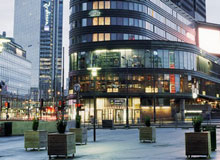
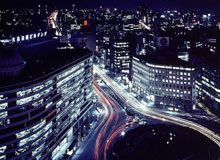
No. 1: Tokyo

Quick lunch: $20.80
Beer at a bar: $10.56
Kilogram of rice: $9.80
Dozen eggs: $4.50
Movie theater ticket: $23.80

Although the consumer price index in the Tokyo area has been falling since 2009, according to data from Japan's statistics bureau, the city remains the world's most expensive. While housing costs are not included in this survey, ECA International estimates that the average monthly rent for a two-bedroom apartment in Tokyo stood at $4,352 in September.

No. 2: Oslo

Quick lunch: $45.20
Beer at a bar: $13.18
Kilogram of rice: $6.10
Dozen eggs: $8.50
Movie theater ticket: $18.80

Norway's capital is a major hub for trade, shipping, and finance and is home to the Oslo Stock Exchange. Oslo has ranked among the world's most expensive cities for years, which is not surprising when a quick lunch costs about $45 and a dozen eggs, $8.50.

No. 3: Nagoya, Japan

Quick lunch: $19
Beer at a bar: $11.37
Kilogram of rice: $8.50
Dozen eggs: $3.60
Movie theater ticket: $21.80

Nagoya is one of Japan's premier industrial and technological centers and is well known for its high quality of life and competitive business costs, according to the U.S. Commercial Service. Unlike Japan's other major cities, Nagoya was not significantly harmed by the global economic downturn and has maintained its growth.

No. 4: Stavanger, Norway

Quick lunch: $32.30
Beer at a bar: $12.83
Kilogram of rice: $5.70
Dozen eggs: $6.80
Movie theater ticket: $17.30

Stavanger was mainly a fishing community until oil was found in the North Sea in the 1960s, transforming it into a major Norwegian city. Today, Norway is a leading oil exporter, with Statoil as the largest oil company in the Stavanger region. The industry has become central to the local economy and has attracted many residents from other countries.

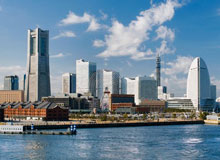
No. 5: Yokohama, Japan

Quick lunch: $16.90
Beer at a bar: $6.59
Kilogram of rice: $4.20
Dozen eggs: $2.50
Movie theater ticket: $21.70

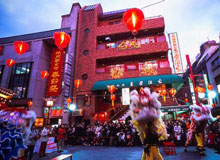
Japan's second-largest city after Tokyo, Yokohama is easily reached from Tokyo by train. The port city is home to over 300 IT firms and has a growing biotechnology base, according to the city. Yokohama has nine main business districts and exports many cars and auto parts.

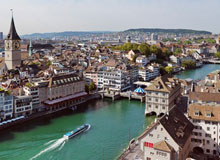
No. 6: Zurich

Quick lunch: $32.90
Beer at a bar: $10.54
Kilogram of rice: $3.70
Dozen eggs: $7.90
Movie theater ticket: $19.60

The financial sector is an important part of Zurich's economy and the city is home to the Swiss Stock Exchange and companies such as Credit Suisse and Swiss Re. Zurich is also a major transportation hub. Mercer ranked the city second in the world for quality of life in 2010, but such a high standard of living does not come cheap: Zurich jumped to No. 6, from being the 10th most expensive city last year.

No. 7: Luanda, Angola

Quick lunch: $52.40
Beer at a bar: $6.62
Kilogram of rice: $4.60
Dozen eggs: $5.20
Movie theater ticket: $13.90

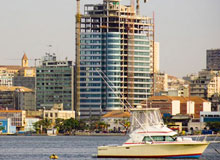
Luanda was the most expensive city in the world in ECA International's 2009 ranking. Last year it slipped to third place, due to the depreciation of the kwanza, and this year it fell again, to No. 7. While the city has a high poverty rate, it remains one of the most expensive places for expatriates to maintain standards of living comparable to those in their home countries.

No. 8: Geneva

Quick lunch: $33.70
Beer at a bar: $9.12
Kilogram of rice: $4.70
Dozen eggs: $8.60
Movie theater ticket: $19.20

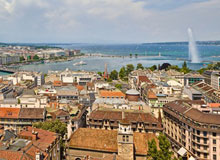
Truly a global city, Geneva is home to such international organizations as the United Nations (which has an office in the city) and the International Committee of the Red Cross. An important center for banking, government, and technology, Geneva attracts many professional visitors, as well as tourists. It ranked as the third-best city in the world for quality of life in Mercer's 2010 report.

No. 9: Kobe, Japan

Quick lunch: $15.60
Beer at a bar: $8.69
Kilogram of rice: $9.30
Dozen eggs: $3.10
Movie theater ticket: $20.80

Kobe is one of Japan's busiest ports and a manufacturing center for appliances, food, and transportation equipment. The city offers many types of cuisine, though it's known best for high grade and pricey Kobe beef.

No. 10: Bern, Switzerland

Quick lunch: $28.80
Beer at a bar: $7.46
Kilogram of rice: $4.70
Dozen eggs: $8.40
Movie theater ticket: $19.10

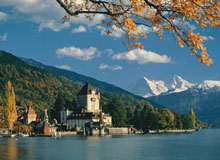
Switzerland's capital, Bern is the center of Swiss government, the engineering industry, and the precision industry, as well as a manufacturing center for watches and other technology used in the medical, IT, and automotive sectors, according to the Bern Economic Development Agency. Branded watches such as Rolex, Longines, Swatch, and Rado are manufactured in the Canton of Bern.

_Yahoo h/t ImpactLab

Personally, I prefer more out of the way locations with more modest costs of living. And to be honest, my own home brewed beer tastes as good or better than most of the best crafted beers one will find. For the cost of a quick lunch in some of the cities above, one could employ a skilled cook to prepare all of one's meals, in many locales.

Of course, when one travels on a business expense account, time, taste, and convenience (and what one can justify) tend to trump everything else.

Labels:

Saturday, February 05, 2011

Modifying Staple Crops to Raise Intelligence of Third World People

Golden Rice

One of the many problems contributing to low intelligence and low productivity of billions of impoverished third world people, is their dependency on staple food crops which lack key nutrients. Staple crops often grow well in local soils and climates, but are lacking in nutritional components which the human body requires for optimal development and functioning.
On a per acreage basis, corn yield exceeds that of the other two major crops, wheat and soybean, by 2- to 3-fold. However, the nutritional quality of corn protein in these high yielding hybrids remains relatively poor due to its deficiency in essential amino acids, such as lysine. The focus of corn breeding on yield, which has resulted in a shift in grain composition from protein to starch1, has compounded this nutritional deficiency. As a major food and feed staple crop, corn is a poor protein source in both quality and quantity. Advancements in agricultural biotechnology may help improve the nutritional quality of corn protein, starting with lysine enhancement. _isb.vt.edu
Understand that the promotion of yield most often occurs through selective breeding by indigenous farmers, and has resulted in the ability to support more people from the same amount of land. But if protein quality is diminished through indigenous farming practises, persons who are dependent upon such staples will not reach their peak levels of development or performance.

Besides maize, other staples being genetically modified include cassava:
Although cassava is a major source of carbohydrates for 700 million people, mostly in Africa, it normally contains only small amounts of protein. Claude Fauquet of the Danforth Plant Science Center in St Louis, Missouri, and his team bumped up the protein content to 12.5 per cent by adding bean and maize genes to make a protein called zeolin. They were surprised to find that the plant used its natural supply of cyanide to provide the building blocks of the new protein. "Cyanide is a source of nitrogen within the plant," explains Fauquet.

While non-modified cassava supplies just one-fifth of daily protein requirements, the extra protein is enough to supply the needs of infants on a typical cassava-based diet (PLoS One, DOI: 10.1371/journal.pone.0016256). Fauquet says his root could save 1 in 4 African children from a potentially fatal condition called protein-energy malnutrition. _NS
PLoSONE article with details on cassava modification

Another staple starch crop being modified to produce more protein, is the "protato."
A team of Indian scientists have grown for the first time, a genetically modified spud called ‘protato’ that makes up to 60 per cent more protein per gram than ordinary potatoes.

Apart from that, the new crop created by Subra Chakraborty and colleagues at India's Central Potato Research Institute in Shimla also yielded more potato per hectare, reports New Scientist.

The team gave the potatoes a gene from the grain amaranth, a South American plant widely eaten across the tropics, including India. It was linked to a DNA code that turns on production of the storage protein in tubers. _IndianExpress
There is no question that such modifications hold one of the keys to successful colonisation of low-gravity space and other planets such as Mars or Luna. The ability to engineer a hardy staple crop which grows in moon gravel or air (aeroponics), and provides virtually all the nutrients and fiber persons need -- including children and pregnant females -- would clearly simplify the food aspect of adaptation to life off Earth.

One of the more famous GM modifications of a staple crop is "golden rice" -- a form of rice engineered to produce high levels of Beta Carotene. In populations suffering chronic Vitamin A deficiencies, such a crop could make a significant improvement in quality of life throughout the human life cycle. Publications detailing the Golden Rice project

Clearly the crop scientists creating the genetically modified foods mentioned above are attempting to create staple crops which the indigenous people will recognise and accept as familiar. But for true pioneers -- such as space colonists -- who are willing to put up with a bit of unfamiliarity initially, a far more radical GM food creation will be required.

What is needed is foods with minimal roots and stems, and maximum edible food. The crop's environment can be structured around its genetic requirements, by design. The food could not have a repellent taste or odour -- probably better for it to have a mild, minimal taste. Space chefs can season the staple to taste like just about anything, as long as the texture and appearance was acceptable.

Labels: ,

Older Posts