Saturday, September 24, 2011

Peak Oil: Meet Primus' Competitive Biomass to Gasoline $1.95/Gal

Get Adobe Flash player
More information on Primus
GCC article about Primus' plans
Primus’s process is based on a proprietary variant of the ExxonMobil Methanol-to-Gasoline process, simplified to produce standard gasoline without need for separation or further treatment, the company says. The Primus process consists of three main steps:
  1. Gasification of biomass (feedstock flexible) to produce a syngas;
  2. CO2 separation and scrubbing of the syngas;
  3. catalytic liquid fuel synthesis using a four-stage catalytic system (the MTG variant).
Primus says that its gasoline is cost-competitive with fossil fuels without subsidies, utilizing carbon-efficient and high fuel-yielding non-agricultural biomass that does not compete with foodstocks.

A February 2011 report from the US Department of Energy’s National Renewable Energy Laboratory (NREL) conclude that gasoline produced via the methanol-to-gasoline (MTG) route (earlier post) using syngas from a 2,000 dry metric tonne/day (2,205 US ton/day) biomass-fed facility could have a plant gate price (PGP) of $1.95/gallon US ($0.52/liter). _GCC

The biomass is pelletised, then gasified. The syngas is converted to methanol, and the methanol is converted directly to gasoline, via Exxon Mobil's highly efficient MTG process -- as modified by Primus. More on MTG:
In the MTG process, dimethylether (DME), the dehydrated derivative of methanol, is reacted over a ZSM-5 zeolite catalyst, on which the chain growth of molecules is sterically hindered, thus allowing only production of gasoline and lighter material. The gasoline product from the MTG process has more than 51 compounds, similar to straight-run gasoline in a petroleum refinery.

This mixture is then separated using a process similar to that used in a gasoline refinery. The design utilized in the NREL model utilizes five distillation columns to separate the remaining gas, LPG, light gasoline, and heavy gasoline. The remaining gas is sent to the fuel combustor. The light gasoline continues without further treatment. The heavy gasoline could proceed through a durene isomerizer in order to eliminate the presence of the 1,2,4,5-tetramethylbenzenes by converting them to 1,2,3,5-tetramethylbenzenes. This stream would then be merged with the light gasoline. The two product streams are LPG and gasoline. _GCC

This is an entirely renewable biomass to gasoline process which is likely to impact the fossil fuels markets in good time. Perhaps the main obstacle to a large scale adoption of biomass to liquid fuels, is the current very cheap price of natural gas.

Labels: ,

Wednesday, September 21, 2011

Welcome to Utopia!

Images via Gizmag

Project Utopia has more in common with an oil rig than it does with a yacht, and in the word's of the consultancy, "breaks the traditional naval architectural mould which the market has come to expect and offers a truly unique outlook free from any conventional design constraints."

...Yacht Island Design's Project Utopia measures some 330 ft (100 m) in length and breadth, spans 11 decks and has the equivalent floorspace of a present-day cruise liner - indeed, and I'm sure this will be a draw-card to any aspiring wealthy megalomaniacs, there is enough space to create an entire micro-nation.

First and foremost, the island's design is stable, being based on a four legged platform and designed for minimum motion in the most extreme sea conditions. Each leg supports a fully azimuthing thruster and with four such units, the design can redeploy between desired locations at slow speed. _Gizmag

The Project Utopia seastead design is clearly oriented toward the luxury-loving wastrel segment of the population. And yet, even the idle rich are human, and deserve their moments of pleasurable idylls. If a billionaire wishes to finance the experimental movement of the land-lubbing race of humans out onto the open sea, who am I to object?
As always, naked girls sold separately. ;-)

Labels:

Friday, September 16, 2011

Is The Missing Carbon Being Turned Into Diamonds?

Scientists have speculated for some time that the Earth's carbon cycle extends deep into the planet's interior, but until now there has been no direct evidence. The mantle–Earth's thickest layer –is largely inaccessible...Analysis [of lower mantle diamonds] shows compositions consistent with the mineralogy of oceanic crust. This finding is the first direct evidence that slabs of oceanic crust sank or subducted into the lower mantle and that material, including carbon, is cycled between Earth's surface and depths of hundreds of miles.

The research is published in the September 15, 2011, online Science Express.__Physorg
Physorg

Climate models have been unable to account for all the "missing carbon," the carbon being released into the atmosphere that seems to "disappear," from view in unaccountable fashion. But is it possible that the oceans are taking this carbon and turning it into carbonaceous rock which is being transformed by Earth's mantle into diamond?
The oceans are voracious consumers of atmospheric carbon. Dissolved CO2 immediately turns into bicarbonate ion almost in entirety. Oceanic sea life rapidly turns this bicarbonate into both biomass and calcium carbonate shells. This organic and inorganic carbon sinks to the seafloor, which over time is subducted into the Earth's mantle.
After the heat and pressure of the mantle have transformed carbons within the subducted oceanic crust into other forms -- including diamond -- some of the transformed carbon is returned to the crust in upwelling mantle plumes.

The lesson for scientists, in all of this, is not to jump to conclusions before all the facts are in. When it comes to the carbon cycle and global climate, the facts have just begun to come in. But we are nowhere close to being justified in coming to conclusions. Stop treating computer models as if they were the actual physical phenomenon being studied! Models are not reality. Stop treating them as such.

Labels:

Tuesday, September 13, 2011

German Designed MTO Sport Gyrocopter Comes to Tomball PD

Wired

Tomball, Texas, is a small community near Houston. Its police budget is too small to afford its own helicopter, so the town is looking for ways to monitor itself from the air without busting its budget. Tomball has turned to the autogyro, lowly cousin to the costly helicopter, and is likely to come out ahead for having done so.
The MTOsport needs roughly the length of a football field to take off, climbs at 13 feet per second and can hit 115 mph. It’ll hover at a relatively low speed, allowing it to mimic a helicopter circling an area under observation.

...the unpowered rotor makes the aircraft safer than a helicopter because you’re already in auto-rotation. In a helicopter, the pilot has to nose the craft down and hope autorotation starts before the chopper hits the ground. If we lost power now we’d simply glide down.

...The big advantage is, of course, cost. A modern police helicopter ready for service can run anywhere from $1.5 million to $4 million. They’re also expensive to operate, averaging around $1,000 per hour with a two-pilot crew.

The Auto-Gyro MTOsport loaded up with radios and painted costs about $75,000 and about $50 an hour to operate, due in part to the fact that it burns regular pump gas. That’s roughly the cost of buying and operating two top-of-the-line squad cars.

...Tomball can’t justify the cost of a helicopter program, so it has to rely upon Houston or Harris County when it needs one. Coordinating the flight and lining everything up can take an hour or more, if a chopper is available at all. But an officer on standby can have the MTOsport airborne in about 10 minutes, including the pre-flight check. That can make a big difference in a metropolitan county with about 4.1 million people.

“By putting a trained pilot and a trained tactical flight officer in this aircraft up over the city of Tomball and the surrounding area, we’re able to essentially deploy the equivalent of 20 police officers,” Haulk says. _Wired

The autogyro will be grounded at night and during inclement weather. But on the whole, the cost savings from this unconventional aircraft should allow Tomball to foil and solve a wide range of criminal activities, as well as aiding in search and rescue tasks.

Labels:

Friday, September 02, 2011

Pumping Water and Aerosols to the Stratosphere

Guardian

Geoengineers like to think big. They are drawn to projects which are geared to a planetary scale. Such a project is this British Royal Society project to pump water 1km into the sky, using a helium balloon tethered water hose.

If that test run is successful, they will be aiming to repeat the experiment at an elevation of 20km.
... a team of British academics will next month formally announce the first step towards creating an artificial volcano by going ahead with the world's first major "geo-engineering" field-test in the next few months. The ultimate aim is to mimic the cooling effect that volcanoes have when they inject particles into the stratosphere that bounce some of the Sun's energy back into space, so preventing it from warming the Earth and mitigating the effects of man-made climate change.


Before the full-sized system can be deployed, the research team will test a scaled-down version of the balloon-and-hose design. Backed by a £1.6m government grant and the Royal Society, the team will send a balloon to a height of 1km over an undisclosed location. It will pump nothing more than water into the air, but it will allow climate scientists and engineers to gauge the engineering feasibility of the plan. Ultimately, they aim to test the impact of sulphates and other aerosol particles if they are sprayed directly into the stratosphere.


If the technical problems posed by controlling a massive balloon at more than twice the cruising height of a commercial airliner are resolved, then the team from Cambridge, Oxford, Reading and Bristol universities expect to move to full-scale solar radiation tests.


The principal investigator, Matthew Watson, a former UK government scientific adviser on emergencies and now a Bristol University lecturer, says the experiment is inspired by volcanoes and the way they can affect the climate after eruptions.


"We will test pure water only, in sufficient quantity to test the engineering. Much more research is required," he said, in answer the question of what effect a planetary-scale deployment of the technology could have.


Other leaders of the government-funded Stratospheric particle injection for climate engineering (Spice) project have investigated using missiles, planes, tall chimneys and other ways to send thousands of tonnes of particles into the air but have concluded that a simple balloon and hosepipe system is the cheapest. The research is paid for by the government-funded Engineering and Physical Sciences Research Council.


"The whole weight of this thing is going to be a few hundred tonnes. That's the weight of several double-decker buses. So imagine how big a helium balloon do you need to hold several double-decker buses – a big balloon. We're looking at a balloon which is possibly 100-200m in diameter. It's about the same size as Wembley stadium," said the Oxford engineering lecturer Hugh Hunt in an interview earlier this year.


"This hose would be just like a garden hose, 20km long and we pump stuff up the pipe. The nice thing about it is that we can really have a knob, if you like, which we can control to adjust the rate at which we inject these particles."


While the October experiment is expected to have no impact on the atmosphere, it could also be used to try out "low-level cloud whitening", a geo-engineering proposal backed financially by Microsoft chairman and philanthropist Bill Gates.


In this case, fine sea salt crystals would be pumped up and sprayed into the air to increase the number of droplets and the reflectivity in clouds. Together, many droplets are expected to diffuse sunlight and make a cloud whiter. _Guardian
There are quite a few other types of crystals and compounds which could be sprayed into the stratosphere besides sea salt crystals or pure water. But to go far beyond those simple compounds, the experimenters would likely have to jump a large number of environmental hurdles.

At this stage, no one seems to be worried that such experiments might block too much sunlight, but that should be a concern for any geoengineering project of this type.

Modern climate science is still in its infant stages of understanding of the atmosphere. Climate models are pathetic trash compactors -- parsimonious garbage in / garbage out number crunchers. If grant-hungry climatologists get the answers they want, they publish them. If not, they go back and tweak the models until they do get the answers they want. A terrific scam if you can get it.

Eventually, climate science will stumble upon the scientific method, and claim to have invented it from scratch. That would be alright, if only climatologists would indeed take the scientific method seriously for once.

In the meantime, all of you geoengineers tread softly on this planet. Recent climate trends have been very nice. If you botch it up, a lot of us will not be happy.

Labels:

Saturday, August 27, 2011

Seasteads: Full Speed Ahead, and Damn the World Government!

Shimizu Seastead Tower

The seasteading idea has been in the news lately, largely due to a Details.com expose of billionaire Peter Thiel, and his quirks. At Next Big Future, David Brin provides his opinion about Seasteading, suggesting that wide scale seasteading may only occur in the context of a world government!

Here is an outline of Brin's thinking on seasteads, which largely come from the writing of his most recent SF book:
1- The core aim is to escape meddling by any modern states...

2- This business plan has to compete with an older and more reliable one: when you want an “offshore” country of your own, simply buy one that already exists...

3- Now, in fairness, this may not only be an option for the rich! ...

4- The ocean is a harsh and dangerous environment. Corrosive to metal and other parts....

5- A related matter. When you are at sea, facing nature’s full brunt, including typhoons and corrosion and threats of all kinds, the daily details of running the place will be neither anarchic nor democratic. There will be a captaincy…...

6- Clearly there is a shortcut through all the red tape and other dangers. I portray it in EXISTENCE. That trick is to forge alliances with already-existing small, island states....

7- ...If you reject the democracies, then will you call them for help, when an armed gang comes to simply take over your sovereign land, by right of conquest?...

8- ... Instead of emphasizing the tax-avoidance aspect (a meme which I predict will bite its promoters back, very hard, in the near future), I’d rather see the emphasis be on freedom to do social experiments. Feminist enclaves? Polygamous or polyamorous paradise? A haven for drug experimentation? For genetic self-mod or for bureaucracy-minimized space launch? A place of self-exile for sex-offenders? A MYOB festival? ...

...Because of the way that WG [ed: World Government] is forming on Planet Earth… with the judiciary and bureaucracy first and the legislature last… the chief effect is to ensure that individual humans have no legal standing before international agencies. Only sovereign nations have standing, can file suit, negotiate treaties, assert rights and privileges.

... If they can establish a dozen or so new, sea-based national entities, to stand alongside the 200 or so that already exist, then the SeaSteaders will be in the same position as the original founders of the New York or London Stock Exchanges.

They will have inheritable or negotiable “seats” — a grandfathered position of “standing” allowing them to step up before WG bodies representing the interests of millions of clients. Large and small.

Think this is about autonomy? Or feudal privilege? Or social experimentation? Naw. These guys are smarter than that.

It’s about getting in on the ground floor of the 21st century’s great new business frontier.* _Brin
Brin may honestly believe that his imagination is an accurate reflection of the outside world. In fact, some of his very strong, but questionable, views on many other topics suggests that this is the case. The anti-solipsistic solipsist. Isn't that always the way?

Brin has a degree in (astro?) physics, and may see himself as a poly-expert of sorts. Certainly writers in general often consider themselves knowledgeable on the topics which they research for reports, articles, stories, and books. Of course, what they are is semi-exposed dilettantes, not experts. But try telling them that! ;-)

What about this world government idea? The concept works fairly well within a number of science fictional plots, but is a world government likely for the near future of planet Earth? Only in the sense that Imperial Rome was a world government, or Alexander's Greece. A government over the "known world," a fudged world government, by name, if not in reality, is always possible.

Far more likely than an orderly world government is a "Coming Anarchy," as described by Robert D Kaplan. World demographic trends projected to the middle of this century predict a diminishment of Europe, North America, and the advanced nations of East Asia -- with an explosive growth in the populations of low IQ tribal areas in Africa and Asia. Multicultural areas within Europe, North America, and Oceania are likely to grow at the expense of the core host populations.

These trends do not paint a picture of a coming, all-powerful world government. So where does Brin likely go wrong? Brin's problem here -- as in other areas of his thinking, apparently -- lies in his assumptions and biases. Unexamined biases are a common curse of intelligent and successful people who feel that "they have arrived." Why mess with success? If it ain't broke, don't fix it. etc etc.

In this case, Brin's bugaboos are the "oligarchs." The concept is presumably borrowed from the Russian experience of the 1990s and 2000s, and extended to all other world societies and cultures. Is this a logical extrapolation?

Regardless, these oligarchs are the puppet-masters and string pullers behind the curtains, and if they decide they want a world government, Brin believes they have the power to create one.

Reality check: All of this [Brin's book plot] takes place within a futuristic setting, in the context of advanced technologies which can extend the power of individuals and cabals significantly. Anything can happen. We willingly suspend judgment just to see what is coming next. But it is not reality.

Al Fin sociologists and futurists believe that Brin is overlooking the most salient dynamic trends occurring on the planet. He does this because they are hiding behind his blind spots, his unexamined assumptions. This means that Brin is in for some significant surprises in the not so distant future.

Lucky Brin.

Labels: ,

Thursday, August 11, 2011

Personal Beer Maker Makes Gallons of Beer in 1 Week


The WilliamsWarn Personal Brewery from WilliamsWarn on Vimeo.
WilliamsWarn Personal Brewery

The series of images below illustrate the steps taken when brewing your personal beer with the WW Personal Brewery.
On Day 1, the home brewmaster must first make sure his equipment is sparkling clean. Then he adds the water, malt extract, yeast, and hops to the beer maker. The thermostat is set to 70 degrees F.
Day 2-5:
When yeast turns malt sugars into ethanol, one by-product is carbon dioxide. The gas is trapped in the tank, and as the pressure builds, CO2 is forced into the beer. A valve allows brewers to regulate the amount of carbonation _PopSci

Day 6:
Once the beer is chilled to 42ºF, brewers add a clarifying agent, which causes the yeast to drop into a collection jar at the base of the tank. Once the beer is clarified, brewers simply close the tank’s lower valve, detach the jar, and dump the yeast down the sink. _PopSci

Day 7:
The CO2 captured in the tank forces the beer through a tube to the tap. A supplementary CO2 canister maintains internal pressure as the beer level drops. _PopSci
The current line of brew kits are restricted to light ales, but ultimately the ocmpany plans to provide the ability to brew as much as 50 pints of ales, lagers, stouts, and more.

These high tech beermakers sell for roughly $5,000. Alternatively, beer lovers can acquire lower tech beermaking equipment using malt extract, for under $200, and buy the makings for 5 gallons of home brew for anywhere between $30 and $50, depending on the type of beer. Or, if you are resourceful you can scrape together brewing equipment for next to nothing, and the ingredients for whole grain brewing for less than the cost of malt extract. And in fact, you can grow your own hops and your own yeast strains.

Beer making is one of the many necessary competencies required for all members of the Society for Creative Apocalyptology, a subsidiary of the Al Fin Syndicate. Beer is a survival drink as well as a social lubricant, a useful item of trade, and a satisfying, nutritious food.

If you have more money than you can spend, consider experimenting with the WW Personal Brewery. You will have to obtain the machine in New Zealand and have it shipped out to your location yourself. If it makes beer with an acceptable quality, you may get some good use of it, and save some time. But more likely you will find that you either love home brewing or hate it. If you love it, you will probably move quickly to other equipment that makes it easier for you to customise your batches.

Labels:

Wednesday, August 10, 2011

A Pandemic of Malthusian Illiteracy

Global economy optimists however say that "Malthusian illiteracy" lurks behind remaining adherents of Peak Oil theory - which basically says conventional oil production will stagnate and fall but demand will go on growing. _MarketOracle
As knowledgeable analysts come to understand that oil demand, rather than oil supply, is currently in the driver's seat, some of the impetus behind the peak oil panic has subsided. And yet the "Malthusian Impulse" continues to drive many observers, against their more rational proclivities. Still, global hydrocarban reserves continue to grow, year after year, and oil demand is slated to decrease in time.

New sources for transport fuels are likely to come from many directions, including new gas-to-liquids (GTL) technologies. Oxford Catalyst's microchannel GTL technology is very much in demand, as are other new varieties of GTL technologies. The market for GTL fuels may be more than 20 million barrels per day! Imagine the impact of that huge new supply on the global oil market. (Note that approximately between 5 and 10 million barrels per day could be produced via GTL from currently flared gas alone. Stranded gas could double that number.) More information at this PDF white paper download from Velocys, creator of the Oxford Catalysts microchannel technology.

A more conventional source for GTL transport fuels is the large scale technology championed by Shell.
In 2011, Shell began shipments from its Pearl GTL project in Qatar...The project is able to produce 140,000 b/d of fuel and 120,000 b/d of ethane and condensates... _Petroleum Economist

And that is just the beginning. As long as the huge price spread between the cost of natural gas and the cost of crude oil remains, more and more GTL projects will kick in to take advantage of this "easy money."

Second and third generation biofuels from biomass technologies are beginning to come on line, slowly (consult Al Fin Energy blog for updated news on this topic). Advanced biofuels technologies are not likely to take an appreciable bite out of crude oil demand for another 5 or 10 years. As long as natural gas prices stay this low, only the most efficient biofuels projects will be able to compete in the liquid fuels markets without government subsidies. But by the year 2030 if the technology continues to develop, the writing will be on the wall. This is a biological world, after all.

Advanced nuclear power technologies are likely to aid the development of new fuels technologies of all kinds, supplying safe and abundant power and heat for a multitude of energy development projects from oil sands to oil shales to biomass and aquaculture projects in cold climates, irrigation and desalination of saltwater in arid climates etc etc.

Other factors leading to a decreased demand for crude oil includes the increasing use of both natural gas and biomass as feedstock for the vast chemicals industry -- an industrial sector previously dependent upon petroleum for feedstock. (see Al Fin Energy blog for much more)

The ongoing global economic downturn and demand destruction extends from Europe to Japan to the US, and is beginning to put stress on the Chinese and Indian economies -- despite all the rah! rah! hype about the coming age of the Chindian global economy. Many nations which have maintained hefty consumer subsidies for transport fuels are being forced to reduce the subisidies. More downward pressure on demand.

Malthusian theories are appealing for their simplicity. And yet the never-ending and never-fulfilled Malthusian predictions of doom ignore the most salient and disruptive human technology of all -- the goal-oriented innovativeness of the human mind.

Despite the best efforts of energy-starvationists in the Obama administration, in the EU bureaucracy, in national bureaucracies of EU nations and advanced nations around the globe -- the prospects for abundant energy and fuels in the future are quite good, as long as the clowns in power do not destroy the economies they oversee.

If you have abundant clean energy and fuels, everything else is doable.

Previously published at Al Fin Energy and Al Fin Central

Labels: ,

Tuesday, August 09, 2011

Bringing Europea and Africa Together, Making More Lebensraum

Atlantropa

The Atlantropa project involves building a hydroelectric dam across the Gibraltar Strait, lowering the level of the Mediterranean Sea by 200 metres, and capturing the enormous energy from the resulting sea level differential between the Atlantic and the Med. At the same time, significant amounts of new real estate would emerge as if by magic, ready for occupation and development.

Building a bridge between Africa and Europe would then become child's play, allowing the massive migratory movement of populations between continents.
Modern Mechanix
This imaginative scheme involves the creation of ice dams / dikes around shallow seafloor, which enable the building of more permanent concrete dams / dikes. The consequent reclaimed lands would allow for further occupation and development of land for multiple uses, including agriculture, energy production, commercial developments, and even residential lands for the daring.

Seriously, such projects for the creation of new European lebensraum belong in the past. Modern Europe cannot occupy and develop all the land it currently has, with the shrinking demographics of Europe's core populations.

But the building of bridges from Europe to Africa could certainly speed the multiculturalisation of Europe, and provide a much needed pressure relief valve for Africa's burgeoning populations.

Labels: , ,

Sunday, July 24, 2011

Throw Another Virgin in the Volcano, Would You Mate?

Seasteading's Missing Link?

Images from Gizmag

Humans are accustomed to living on land. Getting large numbers of people to consent to living offshore on seasteads may require some skilled salesmanship. For example, making at least part of the seastead resemble a landscape, rather than a ship.
The main deck is a beach "cove" of cabanas surrounding a massive ocean view swimming pool, with a waterfall falling nearby from the volcano. _Gizmag

You can throw as many virgins into the volcano as you like, by the way. They will only slide down the waterslide and gentle waterfalls, to land unharmed in the pool below. What mad adventurers as you may find at Al Fin Potpourri are as protective of their virgins as anyone alive.

Labels: ,

Sunday, July 10, 2011

Terrafugia -- Not Exactly a Flying Car -- Gets US NHTSA Approval

...the Terrefugia Transition has gotten regulatory approval to fly and drive in the US. The National Highway Traffic Safety Administration really calls this a "roadable aircraft" meaning it's more a plane that taxis really really well than a great car that can fly above traffic jams. But "flying car" sounds so much more James Bond, doesn't it? _itworld
Terrafugia Gets US Approval to Drive On Roads
Carl Dietrich's Terrafugia team has worked hard for several years to develop, build, and test a vehicle that is both road-worthy and air-worthy. The Terrafugia appears to be both -- in skillful hands -- and generally inexpensive to fly and drive. The $200,000 purchase price is more than your typical compact economy car requires, but if you are going to spend that much money for a vehicle, you are more likely to give it the type of care that it will demand.

Meanwhile, the EU is taking a different approach toward uplifting the daily commute:
The intent of myCopter is to set up a framework in which even the most idiotic drivers will be able to take advantage of personal air vehicles (PAVs). The key, of course, is making sure that the aforementioned idiots have as minimal a role in the operation of their vehicles as possible, which is why the EU wants PAVs to be mostly (or fully) autonomous. Initially, they'll stay out of controlled airspace (i.e. areas around airports where they risk tangling with a 747), but eventually the idea is to have them completely integrated into our existing infrastructure. _Dvice

The US DARPA wants to develop something similar to the EU's concept of an "idiot-proof" flier, and has the Carnegie Mellon Robotics Dept. to help develop their version.
...the U.S. government is also pursuing the idea of a flying car. The Pentagon's Defense Advanced Research Projects Agency awarded a 17-month, $988,000 contract to Carnegie Mellon's Robotics Institute to develop an autonomous flight system for the Transformer (TX) Program.

The TX program aims to develop a robust ground vehicle that can transform into an air vehicle with vertical take-off and landing capability, while offering significant operational flexibility with the ability to travel 250 nautical miles on land and in the air, or a combination, while carrying up to 1,000 pounds.

The Pentagon's DARPA has selected six vendors. AAI Corporation and Lockheed Martin Company are the prime system integrators. Carnegie Mellon University and Pratt & Whitney Rocketdyne are developers of critical enabling technology. Aurora Flight Sciences partnered with ThinGap, and Metis Design Corp, two Small Business Innovation Research (SBIR) recipients to participate in this 12-month effort. _IBT
The DARPA version is far more robust and multi-purpose than the EU version, but then the US Defense Department personnel often see much rougher duty than the fat-bottomed bureaucrats of the EU. ;-)

Labels:

Wednesday, July 06, 2011

Small Fusion Reactors: An Alternative to Fission?

General Fusion

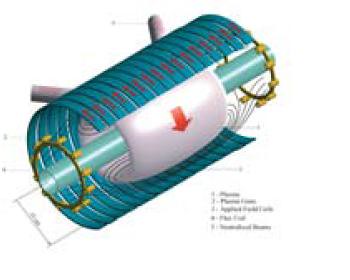
General Fusion is a small startup headquartered near Vancouver, BC. The compression of plasma to achieve fusion is accomplished by a coordinated spherical plasma compression, using pneumatics and advanced switching.
Helion

Helion Energy is located in Redmond, Washington. It is based on a principle of "colliding plasmas," and like all the rest of the small fusion approaches, it is a long shot.
Bussard IEC Fusion

Bussard inertial electrostatic confinement fusion (EMC2 Fusion) involves an electrostatic plasma confinement to achieve fusion. The history and development of the concept is explained in a video reached via the link above. The Bussard IEC has been financed almost entirely by the US Navy. EMC2 is based near Santa Fe, New Mexico.
Dense Plasma Focus Fusion

Lawrenceville Plasma Physics is based in New Jersey. The dense plasma focus approach uses a special pulsing "spark plug" to ionise a gas, and to form a plasmoid "pinch," with the emission of high energy photons, ions, and fusion neutrons.
HyperV

Hyper V Technologies utilises a spherical array of mini railguns to accelerate plasma beams into a central target of deuterium or deuterium-tritium, to achieve fusion (hopefully).
TriAlpha

TriAlpha is an Irvine, California venture, which has been fairly successful in the venture capital game. TriAlpha is a bit secretive with non-investors, but you can read their patent for yourselves. The concept seems to involve the highly sophisticated evolution of an earlier colliding beam fusion approach.

Fusion reactors can be prolific neutron generators, and could be utilised for the transmutation of nuclear wastes into harmless compounds. They could also generate a number of differen highly energetic particles and high energy photons, and used for a number of purposes -- including as space propulsion. Another potential product of fusion reactions is heat. But what is most desired from fusion reactors is abundant, cheap, clean electrical power.

The energy from fusion is higher than the energy from fission, so that less fuel is required to generate equivalent energies. Fusion is generally safer, with less radioactive waste remaining to be disposed of.

Many billions of dollars have been spent by governments in a vain attempt to master the power of the stars on a more human scale. If one of the small startups manages to achieve with $millions what huge government budgets of $billions could not achieve, a revolution would have been ignited which would likely not stop with just cheap, clean, abundant energy.

Labels: ,

How to Survive an Apocalypse in the Suburbs

The suburbs may not seem to be the best place to survive an apocalypse, but some people think it can be done.
Who knows how everything will shake out when the world goes to hell, but the suburbs may be well positioned to thrive with fewer resources, as Brown points out. Suburbs are close enough to the city to be convenient and encourage community building, yet spread out enough to offer yards and substantial garden space. (Suburban soil is also usually less contaminated than urban soil.) The houses are large enough to accommodate multigenerational households and cottage industries, which some demographers predict as coming trends. _CityPaper

Popsci

But you and I know that to well and truly survive an apocalypse in the suburbs, you are going to need a lot of juice -- in more senses than one. You will need plenty of fluids, true. You will also need plenty of heat and electrical power to survive the winters and power air conditioners through the summer. In a third sense of the word "juice", you will need plenty of clout and respect. And what better way to gain the respect of one's extended neighbors, than to have your own functioning nuclear power plant in your backyard?

Consider the thorium molten salt reactor, pictured above:
The MSR design has two primary safety advantages. Its liquid fuel remains at much lower pressures than the solid fuel in light-water plants. This greatly decreases the likelihood of an accident, such as the hydrogen explosions that occurred at Fukushima. Further, in the event of a power outage, a frozen salt plug within the reactor melts and the liquid fuel passively drains into tanks where it solidifes, stopping the fission reaction. “The molten-salt reactor is walk-away safe,” Kutsch says. “If you just abandoned it, it had no power, and the end of the world came--a comet hit Earth--it would cool down and solidify by itself.”

Although an MSR could also run on uranium or plutonium, using the less-radioactive element thorium, with a little plutonium or uranium as a catalyst, has both economic and safety advantages. Thorium is four times as abundant as uranium and is easier to mine, in part because of its lower radioactivity. The domestic supply could serve the U.S.’s electricity needs for centuries. Thorium is also exponentially more efficient than uranium. “In a traditional reactor, you’re burning up only a half a percent to maybe 3 percent of the uranium,” Kutsch says. “In a molten-salt reactor, you’re burning 99 percent of the thorium.” The result: One pound of thorium yields as much power as 300 pounds of uranium--or 3.5 million pounds of coal.

Because of this efficiency, a thorium MSR would produce far less waste than today’s plants. Uranium-based waste will remain hazardous for tens of thousands of years. With thorium, it’s more like a few hundred. As well, raw thorium is not fissile in and of itself, so it is not easily weaponized. “It can’t be used as a bomb,” Kutsch says. “You could have 1,000 pounds in your basement, and nothing would happen.”

Without the need for large cooling towers, MSRs can be much smaller than typical light-water plants, both physically and in power capacity. _PS
And the advantages of the thorium molten salt reactor go on and on. Even many greenies are on board for thorium MSRs.

It is likely to be touch and go to get Obama's nuclear regulatory commission to license the safer, newer, cheaper nuclear plants, but nuclear engineer Kirk Sorensen has founded a company named Flibe, to build and market the devices. Even if he has to go to China to build the reactors, you can always have one smuggled into your country of choice and installed in your back yard under a small carnival tent -- to hide it from annoying satellites.

Remember, if you have a reactor like this, you will have all the juice you could possibly need. You could even build a giant dome over your entire neighborhood and give it the climate of Tahiti year-round, if you like. Tropical fruits taste quite good, particularly in the middle of typical apocalyptic mass food shortages.

But don't get cocky. Once residents of surrounding suburbs and neighboring cities catch on to the fact that you had the foresight to prepare for the apocalypse, they will want a large piece of what you have. That is where juice -- and knowing how to use it -- truly comes in handy.

More on this topic in a future posting.

Labels: ,

Monday, July 04, 2011

Fuel-Electric Hybrid Flying Car from Trek Aerospace

This ducted fan beauty aims to utilise a fuel-electric hybrid power system, the first flying car to do so.
Gizmag
Michael Moshier and Robert Bulaga of Trek Aerospace are forming a new company to develop the hybrid Air Car, which will combine recent technological advances in materials and electronics with the kind of duct-fan technology that was used in the now-retired Springtail single person vertical take-off-and-landing (VTOL) vehicle.

Moshier and Bulaga are currently on the lookout for funding partners to help the multi-person transport project take off (sorry!) and a number of real world scenarios for its use have been suggested - from being useful for emergency services such as search and rescue, police patrol and medical support, to providing vital lifelines for those areas of the world where established transportation systems are lacking.

Given the probable cost of the first vehicles to roll off the production line, it's more likely that thrill-seekers with bottomless bank accounts will be amongst the very first to power up the four fans and take to the skies. _Gizmag
But who are they kidding? The only ones with bottomless bank accounts are governments who can print their own money. Military organisations are likely to see such vehicles first after production.

Contrast the Trek hybrid above with the Euro- "MyCopter" pictured below:
Gizmag

EU bureaucrats have mulled over ways to keep their cities free of automobile traffic, and may have settled on one possible solution: the flying car taxi and commuter.
A European Union project known as myCopter has set aside funds of €4.2 million (US$6.2m) to investigate the possibility of introducing Personal Aerial Vehicles (PAVs) into the skyways of many congested European cities. This coming age of the "flying car" where vehicles leave the roads and launch into the skies promises to solve problems like dramatically rising urban traffic congestion...

..."We aim to develop technologies that could be used to form a new transportation system for personal travel that uses the third dimension, and which takes into account questions surrounding the expectations of potential users and how the public would react to and interact with such a system," Prof Heinrich Bülthoff of the Max Plank Institute for Biological Cybernetics in Tübingen, Germany, told Gizmag.

The myCopter project envisions that the PAVs and PATS (personal air transport systems) would initially be used to fly at low altitudes for domestic travel between homes and working places. By flying below 2000 feet, the new traffic system hopes to operate outside of controlled airspace, without ground-based traffic control and without impacting on existing air traffic. _Gizmag

Another approach, from Australia, is tailored to the flying motorcyclist.

Labels:

Sunday, July 03, 2011

Climate Hockey Stick From a Distance: Where to From Here?

Prolific and innovative thinker and scientist J Storrs Hall takes a look at where the climate has been, compares current climate with similar climate curves in the past, and slyly invites readers to guess where the climate is likely to be heading.

First -- Where the climate has been over the past 10,000 years or so... :
Images from WUWT

Next -- Comparing our current climate curve with similar climate curves from the past, to get an idea of a possible trajectory... :
Here I’ve plotted the 400 years following each minimum in the record that leads to a sustained sharp rise. There were 10 of them; the first five are plotted in cyan and the more recent 5 in blue. You can see that in the latter part of the Holocene the traces settle down from the wilder swings of the earlier period. Even so, every curve, even the early ones, seems to have an inflection — at least a change in slope — somewhere between 200 and 250 years after the minimum.

The hatched black line is the average of the 5 recent (blue) spikes. The red dots are the uptick at the end of GISP2 and HadSST, spliced at 1850. Note that ALL the minima dates are from GISP2. _WUWT

Then Josh invites readers to guess what will happen next, if history is any guide.

For some parts of the northern hemisphere, it may be time to get out the summer parkas.

Climate simpletons who believe that the global climate is controlled by one trace gas which constitutes less than 0.04% of the planetary atmosphere, have controlled the microphones, printing presses, funding agencies, and public stage for far too long. It is time for science to displace the politically convenient (and economically lucrative) climate hysteria, so that ordinary people can make rational plans.

Labels:

Thursday, June 30, 2011

Thorium Can Fuel the Next Millenium

For humans to enjoy a clean and abundant energy future, they will need to move to energy from nuclear reactions -- which means nuclear fission, for now. Thorium is the main alternative to uranium as a large-scale nuclear fuel. Here are some basic facts about thorium:
Thorium is a naturally-occurring, slightly radioactive metal discovered in 1828 by a Swedish chemist, Jons Jakob Berzelius, who named it after Thor, the Norse god of thunder. The silvery white metal is found in small amounts in most rocks and soils, where it is about three times more abundant than uranium. Typical garden variety soil commonly contains an average of around 6 parts per million (ppm) of thorium.


Applications
Thorium oxide, also called thoria, has one of the highest melting points of all oxides at 3300°C. When this oxide is heated in air, thorium metal turnings ignite and burn brilliantly with a white light. Because of these properties, thorium has found applications in welding electrodes, heat-resistant ceramics, light bulb elements, lantern mantles and arc-light lamps. Glass containing thorium oxide has a high refractive index and dispersion and is used in high quality lenses for cameras and scientific instruments.
Sources and geographical distribution

The most common source of thorium is the rare earth phosphate mineral, monazite, which may contain up to about 12 percent thorium phosphate; however, the average is closer to a 6-7 percent range. Monazite is found in igneous and other rocks but the richest concentrations are in placer deposits, concentrated by wave and current action with other heavy minerals. World monazite resources are estimated to be about 12 million tonnes, two-thirds of which are in heavy mineral sands deposits on the south and east coasts of India. Australia is estimated by the USGS to host approximately 24 percent of the world’s thorium reserves. A large vein deposit of thorium and rare earth metals have been discovered in the Lemhi Pass region of Idaho and Montana.
Going nuclear
Although not fissile itself, thorium has started to reemerge as a tempting prospect to employ as fuel in nuclear power reactors. Thorium 232 will absorb slow neutrons to produce uranium 233, which is fissile (and long-lived). The irradiated fuel can then be unloaded from the reactor, the uranium 233 separated from the thorium, and fed back into another reactor as part of a closed fuel cycle. Alternatively, uranium 233 can be bred from thorium in a blanket, the uranium 233 separated, and then fed into the core.
The use of thorium-based fuel cycles has been studied for about 40 years, but on a much smaller scale than uranium or uranium/plutonium cycles. Basic research and development has been conducted in Germany, India, Japan, Russia, the UK and the USA. China and India have been among primary catalysts in research efforts to use it. Test reactor irradiation of thorium fuel to high burn-ups has also been conducted and several test reactors have either been partially or completely loaded with thorium-based fuel.
Thorium can be used in Generation IV and other advanced nuclear fuel cycle systems.
China has been working on developing the technology for sodium cooled fast reactors which are a type of liquid fluoride thorium reactors (LFTRs). The advanced breeder concept features a molten salt as the coolant, usually a fluoride salt mixture. This is hot, but not under pressure, and does not boil below about 1400°C. Much research has focused on lithium and beryllium additions to the salt mixture. In mid-2009, AECL signed agreements with three Chinese entities to develop and demonstrate the use of thorium fuel in the Candu reactors at Qinshan in China. _UraniumInvesting
The best ongoing source for information on thorium energy is Kirk Sorensen's blog "Energy from Thorium".

Kirk is featured in the introductory video below. You can click on the YouTube icon on the video below to watch the vid at YouTube, and to find links to several related videos -- some of them well over an hour in length.

Another blog dedicated to the molten salt reactor is the Nuclear Green blog.

Here's more on thorium, from a piece in Popsci from last summer:
An abundant metal with vast energy potential could quickly wean the world off oil, if only Western political leaders would muster the will to do it, a UK newspaper says today. The Telegraph makes the case for thorium reactors as the key to a fossil-fuel-free world within five years, and puts the ball firmly in President Barack Obama's court.


Thorium, named for the Norse god of thunder, is much more abundant than uranium and has 200 times that metal's energy potential. Thorium is also a more efficient fuel source -- unlike natural uranium, which must be highly refined before it can be used in nuclear reactors, all thorium is potentially usable as fuel. _Popsci

Another basic overview on thorium

Yet another overview from Wired

Taken from an earlier article published at Al Fin Energy

Labels:

Tuesday, June 21, 2011

Small Cities as Seeds to Help Feed Knowledge Economy

The US is a dynamic mixture of large and small. While in most nations it is the large central cities which feed knowledge and culture to the rest of the society, in the US knowledge and culture flows in both directions.
Images from Wired

Livable cities draw creative people, and creative people spawn jobs. Some places you’d never expect—small cities not dominated by a university—are learning how to lure knowledge workers, entrepreneurs, and other imaginative types at levels that track or even exceed the US average (30 percent of workers). Here are some surprising destinations from the data of the Martin Prosperity Institute, directed by Richard Florida, author of The Rise of the Creative Class. _Wired

Most conventional analysts of societal growth and knowledge dynamics will assume that knowledge flows out of large universities and university towns into society at large. But in a free society with a market economy, knowledge is apt to originate most anywhere the market operates. And that knowledge is apt to flow anywhere the market can reach.
Above: How Omaha Nebraska was transformed into one of the US Midwest's most vibrant cultural hubs, starting in the 1990s and proceeding into the 2000s (see case study).

Labels:

Saturday, June 18, 2011

$74,000 for a Tiny Piece of God's Country

Rio Grande River Valley Near Taos

Images via Zillow

Somewhere within 20 miles of Taos, New Mexico, sits a tiny 320 sq ft dome with a lovely view of the Sangre de Cristo mountains. Also nearby is the scenic Rio Grande River Gorge. Skies over the dome are almost always clear -- deep blue in the daytime and incredibly starry at night. The dome sits on 10 acres of land, all for $74,000. But you will need to get used to living off the grid.
“There’s quite a few people who are interested in building dome homes,” explained listing agent John Kejr of Dreamcatcher Real Estate. “There are a probably a couple of dozen different companies that have [the kits].”

Dennis Johnson of Natural Space Domes in Minnesota sells kits for building a dome home — either the entire pre-fabricated kit with framework and sheeting and interior panels or a basic kit, which just includes the metal connection brackets.

While a small dome home kit, like the one in Taos, costs somewhere under $5,000, three, four and five-bedroom plus homes can cost anywhere from $25,000 to $100,000, and Johnson claims they’re relatively easy to build and someone without a lot of construction experience can build one.

“The dome is a connect-the-dots kind of thing, a very easy system,” he said. “It’s like a giant Tinkertoy set.”

...The home is near the Rio Grande river and has “spectacular views” of the mountains, Kejr said, but be prepared to use an all-wheel drive vehicle to access the property during heavy rainstorms due to muddy conditions. _Zillow

Hmmm. Remote location, off-grid, difficult to access in wet or wintry weather? Generally fine weather. Beautiful view of the Sangre de Cristos and relatively near access to the river gorge and to prime winter skiing?

Who could ask for a better location for surviving the next apocalypse?

Labels:

Monday, June 13, 2011

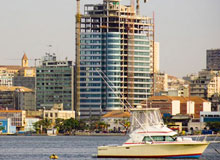
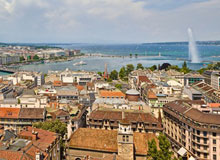
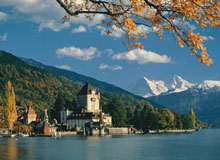
Japan, Switzerland, Norway: Most Expensive Cities in World

Where do you go when you need to get rid of a lot of money quickly, merely by living a normal life? According to the World's Most Expensive Cities List from KPMG, Japan, Switzerland, and Norway are likely to have a town for you.

No. 1: Tokyo

Quick lunch: $20.80
Beer at a bar: $10.56
Kilogram of rice: $9.80
Dozen eggs: $4.50
Movie theater ticket: $23.80

Although the consumer price index in the Tokyo area has been falling since 2009, according to data from Japan's statistics bureau, the city remains the world's most expensive. While housing costs are not included in this survey, ECA International estimates that the average monthly rent for a two-bedroom apartment in Tokyo stood at $4,352 in September.

No. 2: Oslo

Quick lunch: $45.20
Beer at a bar: $13.18
Kilogram of rice: $6.10
Dozen eggs: $8.50
Movie theater ticket: $18.80

Norway's capital is a major hub for trade, shipping, and finance and is home to the Oslo Stock Exchange. Oslo has ranked among the world's most expensive cities for years, which is not surprising when a quick lunch costs about $45 and a dozen eggs, $8.50.

No. 3: Nagoya, Japan

Quick lunch: $19
Beer at a bar: $11.37
Kilogram of rice: $8.50
Dozen eggs: $3.60
Movie theater ticket: $21.80

Nagoya is one of Japan's premier industrial and technological centers and is well known for its high quality of life and competitive business costs, according to the U.S. Commercial Service. Unlike Japan's other major cities, Nagoya was not significantly harmed by the global economic downturn and has maintained its growth.

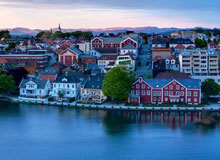
No. 4: Stavanger, Norway

Quick lunch: $32.30
Beer at a bar: $12.83
Kilogram of rice: $5.70
Dozen eggs: $6.80
Movie theater ticket: $17.30

Stavanger was mainly a fishing community until oil was found in the North Sea in the 1960s, transforming it into a major Norwegian city. Today, Norway is a leading oil exporter, with Statoil as the largest oil company in the Stavanger region. The industry has become central to the local economy and has attracted many residents from other countries.

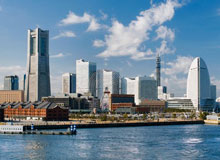
No. 5: Yokohama, Japan

Quick lunch: $16.90
Beer at a bar: $6.59
Kilogram of rice: $4.20
Dozen eggs: $2.50
Movie theater ticket: $21.70

Japan's second-largest city after Tokyo, Yokohama is easily reached from Tokyo by train. The port city is home to over 300 IT firms and has a growing biotechnology base, according to the city. Yokohama has nine main business districts and exports many cars and auto parts.

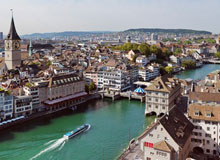
No. 6: Zurich

Quick lunch: $32.90
Beer at a bar: $10.54
Kilogram of rice: $3.70
Dozen eggs: $7.90
Movie theater ticket: $19.60

The financial sector is an important part of Zurich's economy and the city is home to the Swiss Stock Exchange and companies such as Credit Suisse and Swiss Re. Zurich is also a major transportation hub. Mercer ranked the city second in the world for quality of life in 2010, but such a high standard of living does not come cheap: Zurich jumped to No. 6, from being the 10th most expensive city last year.

No. 7: Luanda, Angola

Quick lunch: $52.40
Beer at a bar: $6.62
Kilogram of rice: $4.60
Dozen eggs: $5.20
Movie theater ticket: $13.90

Luanda was the most expensive city in the world in ECA International's 2009 ranking. Last year it slipped to third place, due to the depreciation of the kwanza, and this year it fell again, to No. 7. While the city has a high poverty rate, it remains one of the most expensive places for expatriates to maintain standards of living comparable to those in their home countries.

No. 8: Geneva

Quick lunch: $33.70
Beer at a bar: $9.12
Kilogram of rice: $4.70
Dozen eggs: $8.60
Movie theater ticket: $19.20

Truly a global city, Geneva is home to such international organizations as the United Nations (which has an office in the city) and the International Committee of the Red Cross. An important center for banking, government, and technology, Geneva attracts many professional visitors, as well as tourists. It ranked as the third-best city in the world for quality of life in Mercer's 2010 report.

No. 9: Kobe, Japan

Quick lunch: $15.60
Beer at a bar: $8.69
Kilogram of rice: $9.30
Dozen eggs: $3.10
Movie theater ticket: $20.80

Kobe is one of Japan's busiest ports and a manufacturing center for appliances, food, and transportation equipment. The city offers many types of cuisine, though it's known best for high grade and pricey Kobe beef.

No. 10: Bern, Switzerland

Quick lunch: $28.80
Beer at a bar: $7.46
Kilogram of rice: $4.70
Dozen eggs: $8.40
Movie theater ticket: $19.10

Switzerland's capital, Bern is the center of Swiss government, the engineering industry, and the precision industry, as well as a manufacturing center for watches and other technology used in the medical, IT, and automotive sectors, according to the Bern Economic Development Agency. Branded watches such as Rolex, Longines, Swatch, and Rado are manufactured in the Canton of Bern.

_Yahoo h/t ImpactLab

Personally, I prefer more out of the way locations with more modest costs of living. And to be honest, my own home brewed beer tastes as good or better than most of the best crafted beers one will find. For the cost of a quick lunch in some of the cities above, one could employ a skilled cook to prepare all of one's meals, in many locales.

Of course, when one travels on a business expense account, time, taste, and convenience (and what one can justify) tend to trump everything else.

Labels:

Sunday, June 05, 2011

Why Couldn't Sub-Saharan Africans Invent the Wheel?

IQ Map of World

Before relatively recent contact with outside cultures, Subsaharan Africans did not invent the wheel, did not invent writing, developed minimal art, or agriculture, lacked musical instruments beyond simple percussion, and came up virtually empty in terms of math, science, and technology. Why the absence of invention and development?

The map of world IQ at top provides a tentative answer to the question, but the map raises a more central question: Why do SubSaharan African populations test so low, on average, on tests of IQ, executive function, and impulse control? Is it possible that a significant part of the development of the human "superbrain" -- which makes modern advanced civilisation possible -- developed after humans left the African birthplace?
The dispersal of modern humans from Africa to Europe some 50,000 to 60,000 years ago provides a “minimum date” for the development of language, Hoffecker speculated. “Since all languages have basically the same structure, it is inconceivable to me that they could have evolved independently at different times and places.”

A 2007 study led by Hoffecker and colleagues at the Russian Academy of Sciences pinpointed the earliest evidence of modern humans in Europe dating back 45,000 years ago. Located on the Don River 250 miles south of Moscow, the multiple sites, collectively known as Kostenki, also yielded ancient bone and ivory needles complete with eyelets, showing the inhabitants tailored furs to survive the harsh winters.

The team also discovered a carved piece of mammoth ivory that appears to be the head of a small figurine dating to more than 40,000 years ago. “If that turns out to be the case, it would be the oldest piece of figurative art ever discovered,” said Hoffecker, whose research at Kostenki is funded in part by the National Science Foundation.

The finds from Kostenki illustrate the impact of the creative mind of modern humans as they spread out of Africa into places that were sometimes cold and lean in resources, Hoffecker said. “Fresh from the tropics, they adapted to ice age environments in the central plain of Russia through creative innovations in technology.”

Ancient musical instruments and figurative art discovered in caves in France and Germany date to before 30,000 years ago, he said. “Humans have the ability to imagine something in the brain that doesn’t exist and then create it,” he said. “Whether it’s a hand axe, a flute or a Chevrolet, humans are continually recombining bits of information into novel forms, and the variations are potentially infinite.” _SB

The absence of sophisticated invention or innovation prior to the human diaspora out of Africa, or in SubSaharan Africa since that diaspora, suggests a potentially deep distinction in the way that humans inside SS Africa think in comparison to how Eurasian humans learned to think.

It would be good to be able to research this puzzle, but unfortunately, the straitjacket of Political Correctness prevents the raising of such questions -- even for purposes of objective scientific research. Which means that those of us who are curious will have to conduct our investigations under the table, so to speak.

Is that not always how it is, when intelligent and curious humans are faced with oppressive and authoritarian culture-reichs, such as the modern quasi-left postmodern PC culture?

Ancient Inventions

Inventions of Ancient China

Top 10 Ancient Inventions

Previously published at abu al-fin

Labels: , , , ,

Thursday, June 02, 2011

More Ways to Halt the Mosquito Apocalypse

Scientists at UC Riverside have made some discoveries which put them in something of a race with scientists at Vanderbilt University, to produce the best chemical mosquito repellent and/or neutraliser.
To find human hosts to bite and spread disease, these mosquitoes use exhaled carbon dioxide as a vital cue. A disruption of the vital carbon dioxide detection machinery of mosquitoes, which would help control the spread of diseases they transmit, has therefore been a long sought-after goal.

Anandasankar Ray, an assistant professor of entomology at the University of California, Riverside, and colleagues report in the June 2 issue of Nature (cover story) that they have identified in the lab and in semi-field trials in Africa three classes of volatile odor molecules that can severely impair, if not completely disrupt, the mosquitoes' carbon dioxide detection machinery.

...The three classes of the odor molecules are:
Inhibitors: Odor molecules, like hexanol and butanal, that inhibit the carbon dioxide receptor in mosquitoes and flies.

Imitators: Odor molecules, like 2-butanone, that mimic carbon dioxide and could be used as lures for traps to attract mosquitoes away from humans.

Blinders: Odors molecules, like 2,3-butanedione, that cause ultra-prolonged activation of the carbon dioxide sensing neurons, effectively "blinding" the mosquitoes and disabling their carbon dioxide detection machinery for several minutes.

"These chemicals offer powerful advantages as potential tools for reducing mosquito-human contact, and can lead to the development of new generations of insect repellents and lures," said Ray, who led the study. "The identification of such odor molecules – which can work even at low concentrations, and are therefore economical – could be enormously effective in compromising the ability of mosquitoes to seek humans, thus helping control the spread of mosquito-borne diseases." _PO
Mosquito borne diseases take a severe toll in human life and cause untold disability every year. Learning to distract mosquitoes from seeking out human victims would improve living conditions across much of the world.

Labels: ,

Newer Posts Older Posts